Recycling and Reusing Hints for the New Year

by LSIA Senior Advisor Celeste Riddle

Now that the holidays are over, it is time to bite the bullet and tighten the budget!  Did you know we can actually reuse some of the items we may normally trash or recycle?  It is also possible to use some products in different and unique ways.  Here are some ideas for saving money and for saving the planet!

Salad dressing – When the mayonnaise jar is almost empty, sprinkle a few drops of vinegar inside, add flavorful herbs, and shake well. This serves one salad.

Cheap facial tissues – Most “boutique” square boxes of tissues hold 60 tissues and are expensive.  Buy a larger box of tissues.  Open up the sides of each box and remove the tissues in one big bundle from the larger box.  Divide it in half and fold in half with the pull-the-tissue side on the outside.  Place the folded tissues in the smaller box and tape side closed.  Pull first tissue through the slot.  You’ll have two small boxes of tissues for the price of one larger box!  

Fresh flower arranger – Rather than use a pretty elastic hair band for a ponytail, use one of them to keep flowers in place!   Wrap the elastic band around the flower stems about halfway up the stems, place in a wide-mouth vase and let the flowers fall naturally.  

 Yogurt containers, margarine tubs or coffee cans – all can be reused.  Use the smaller containers as storage for craft supplies.  Coffee cans are great for dispensing paint and preventing drips.  Cut off all-but-one quarter section from the plastic lid.  Press it on the can rim.  Use this cut edge of the lid to scrape off excess paint.  No drips!

Potting soil helpers – When your old sponges are getting ragged, cut them up into squares slightly larger than the drainage hole of a flower pot.  Place the sponge over the hole before filling the pot with soil.  Excess water will drain out, but soil stays put! 

Traveling toiletries container – Use your old, insulated lunch box to store toiletries.  The soft sides accommodate bulky bottles, the waterproof insides protect luggage from spills and the handle hangs over a bathroom door hook.

Bag clamps and linen holders – Save those slide-clip pants hangers that come from the store to make your own bag clamps.  Snip off the ends of the hangers with heavy-duty scissors.  The clamps can be used on any bag around the house or workshop.  The hangers can also be used “as is” to store tablecloths and linens vertically in the closet to keep them from wrinkling.

Cabinet door silencers – Slice a wine-bottle cork into thin disks.  Glue them onto the inside corners of cabinets to quiet the closing/slamming noise.

Storing a paintbrush overnight in mineral spirits or water, attach an old pencil to the handle of the brush with a rubber band.  Make sure the pencil extends below the bristles to keep the bristles from curling and to prevent the brush from sitting in any debris that settles to the bottom of the can.  Also, whenever you clean your paintbrushes after using oil-based paint, you can recycle the paint thinner!  After cleaning the brushes, let the paint solids settle to the bottom of the container and then slowly pour the clear thinner back into the original container and reuse it.  It won’t lose its cleaning ability!

Loose screws – if the screws that hold the light globes to your ceiling fan tend to loosen and then hum or rattle, remove each globe and slip a wide rubber band around the neck of the globe where the screws grip it.  The band will prevent the screws from loosening, quiet any noise, and protect the globe from the screws being overtightened.

Nailing a small brad or nail is difficult if you can’t hold it in your fingers.  Poke the nail or brad halfway through the edge of a business or 3x5”card.  Then hold the opposite end of the card and hammer away!  The card easily pulls off once the nail is set.

Rubber mallets can leave behind black marks, so stretch an old pantyhose leg over the mallet head and fasten it around the handle with tape.  No more black marks!  Prying a bent nail from woodwork or walls with a hammer can also leave unsightly marks.  Place the bill of an old baseball cap behind your hammer before prying the nail.  The cap bill prevents hammer damage!

Keep your trash or leaf bag in place with sections of old garden hose.  Cut four 9-inch-long pieces of hose, slit them lengthwise, and place them over the trash can rim.

Your toilet will run if the lift chain on your toilet flapper gets caught underneath when the flapper closes.  Cut a plastic soda straw in half and feed the chain through it.  The straw stiffens the chain and keeps it from being sucked under the flapper!

A clever way to prevent the starting end of a roll of tape from sticking to the roll is to place a toothpick under the cut end.  No more prying and scraping up the tape! 

It is TIME to find unique ways to recycle everyday things to make life easier and to save the planet at the same TIME!
 

December 2025- Cutting Your Exposure to Plastics

By Celeste Riddle

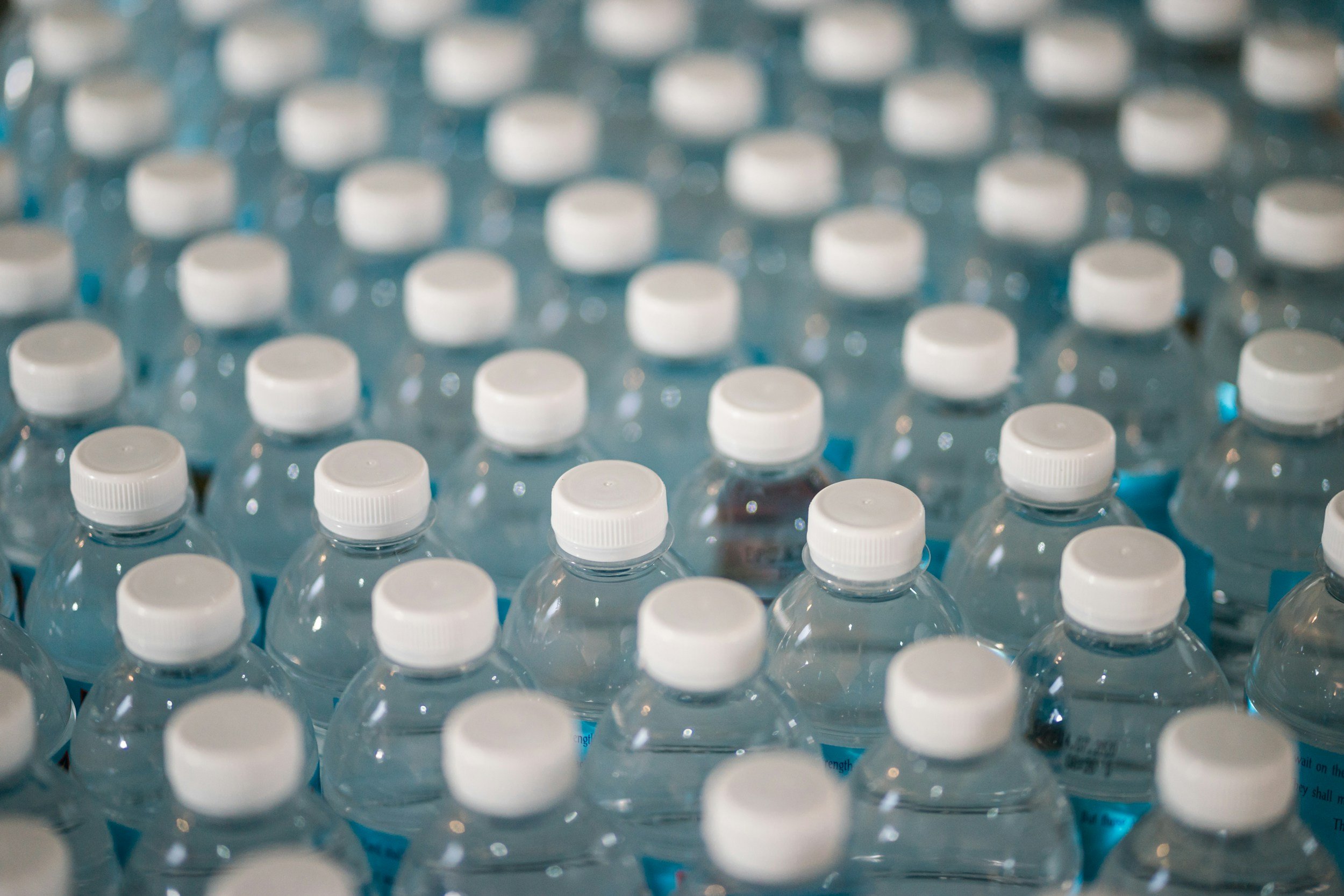
This month we’ll continue with ways to reduce our exposure to plastics.  Plasticizers—the most common of which are called phthalates (pronounced tha layts)—are used to make plastic more flexible and durable and are so widely used that they show up inside almost all of us!  They show up along with bisphenols, such as BPA, and both types of chemicals have been linked to a long list of health concerns, even at very low levels.  BPA, or bisphenol A, is a synthetic chemical used to make certain types of hard, clear polycarbonate plastic and epoxy resins. These materials are found in products like reusable water bottles, food storage containers, and the linings of food and beverage cans.  BPA can leach into food and drinks, especially when the plastic is heated.  You will see “BPA Free” on some of these items due to their potential health concerns.  Look for it when you shop.

What are the harmful effects of phthalates?  It has been shown in tests that those who were exposed to more phthalates are more likely to develop type 2 diabetes.  Higher phthalate levels are also connected to obesity, perhaps because the chemicals affect the hormones that regulate fat tissue.  Since phthalates can affect hormones, this, in turn, can affect fertility and development.  Early efforts to limit exposure to them focused on food packaging, but it’s clear that phthalates, in particular, can also get into our food from the plastic in the tubing, conveyor belts and gloves used during food processing, and can even enter directly into meat and produce by way of contaminated water and soil.  While we wait for the big policy changes that are needed to address the health risks posed by phthalates and bisphenols, there are some things you can do to help to protect yourself and your family.  Here are six steps you can take:

Avoid plastic food storage containers.  If you do use them, don’t heat them in the microwave and avoid using them to store hot food because heat can increase leaching.  Consumer Reports picks glass and steel food storage containers as good alternatives.  Keep food well below the top of the container to avoid contact with the plastic lids.  

Steer clear of fast foods!  Easy to say; hard to do, but Consumer Reports testing found some of the highest levels of phthalates and phthalate substitutes are in fast food.  Although we don’t know the exact reason why, one possible explanation is that fast foods are often prepared by people wearing vinyl gloves which are known to be extremely high in these chemicals.

Limit high-fat foods.  Research has found higher levels of plasticizers, many of which are known to be fat-soluble, in foods with higher fat content.  For example, one review reported that levels of DEHP (chemical used to make plastic softer and more flexible) were often almost five to ten times as high in cream as they were in milk.

Eat fresh, minimally processed food.  Make sure your diet includes plenty of unpackaged fruits and vegetables which have fewer chances to be contaminated.  No need to put bananas or other produce in plastic bags!  A recent study found that people who ate more ultra-processed foods, such as, French fries and ice cream bars, had higher levels of certain phthalate byproducts in their urine.

Choose wood, stainless steel and silicone for kitchen tools.  Chopping on a plastic cutting board can generate microplastics, so consider using a wooden or silicone board instead.  Some plastic uses are probably riskier than others, such as, dumping hot food into a plastic bowl and using plastic wrap for leftovers which may expose you more than giving your lettuce a quick dry in a plastic salad spinner, for example.

Use water bottles made of glass or steel.  Avoid plastic bottles and cups, which are often made with bisphenols.  Carrying your own stainless-steel straws can also make it easier to say “no” to plastic straws.  And as a bonus, you’ll reduce the amount of trash you generate. 

Food isn’t the only way you’re exposed to these chemicals, so if you want to reduce your exposure to them, think broadly.  Phthalates, for example, which are a viscous liquid in their raw form, are also a common ingredient in perfumes, cleansers, shampoos and other cosmetics, and are sometimes used in flooring and furniture.  Here are a few smart steps you can take to try to eliminate or reduce your exposure:

Go fragrance free!  Soap, cosmetics and cleaners with fragrances often use phthalates, especially DEP, as a solvent.  DEP chemicals refer to Diethyl Phthalate (DEP), a colorless liquid used as a plasticizer and solvent in products like fragrances, cosmetics, and certain industrial and medical applications.  Its primary function is to help fragrance components blend evenly and last longer by slowing down their evaporation.  While some organizations deem it safe, other research has raised concerns about its potential for reproductive and hormonal effects. Read labels!

Open your windows!  Since phthalates can be used in furniture, shower curtains and flooring, they can accumulate in household dust, which you then inhale.  Ventilation is important, and if you’re vacuuming, make sure you do that with the window open!

Refuse paper receipts!  Yes, really.  Go for the digital choice instead.  Thermal paper receipts (the ones that are a little glossy) are often coated in bisphenols.

Limit your use of vinyl!  Plasticizers are usually a key ingredient in vinyl products.  When possible, choose alternative materials for shower curtains, flooring, car interiors and clothing.  Note that vinyl is sometimes called “vegan leather.”

You can try your best to be a safer and wiser consumer and follow these steps to become healthier and to help to Save Our Planet.  


November 2025 - New Uses for Old Things

by Celeste Riddle

Just when I think I have found them all, new ideas keep appearing.  If you are like me, you find it fun to repurpose everyday items with different uses so that you don’t have to go out to buy something else.  It makes life easier, it saves money and it saves the planet!  We’ll start with: 


Cooking Spray – Remember this when we have our first snow!  Liberally apply cooking spray to both sides of a plastic or metal shovel before clearing away snow, and ice will slide right off instead of building up. (Google Images via Lesson Pik)


Vegetable oil or cooking spray will also put a shine on leather shoes.  Use a damp cloth to remove any dirt, and then run a soft cloth with a drop of oil over the surface to (literally) add polish. 


Wine Corks – Do you have too many wine corks?  Slice them into thin disks and silence cabinet doors that slam with cork disks glued onto the inside corners. (Google Images via A Bubbly Life)


Anchor a cutting board.  Place a circle under each corner of the board so it stays put while you slice and dice. 


Prevent tabletop scratches. Attach a circle to the bottom of a vase so it doesn’t scuff surfaces.


Protect the walls. Position a disk on each corner of a picture frame so the edges won’t mark the paintwork. 


Plastic bread tags - Tell your wires apart with labeled bread tags inserted onto the wire.  Write with a Sharpie. 


Old suitcases in the attic?  This is perfect for a guest room!  Make your own beautiful side table by piling up vintage suitcases, and top it off with a rustic mirror. (Google Images/Amazon.com)


Rubber bands – Wrap several around a glass to give fingers a better grip on a chilly or slippery glass. 


There are no more worries of camisoles, sundresses, and other slippery garments falling off hangers when you wrap the ends with wide rubber bands. 


Toothpicks – Label meat.  Are these burgers rare or well-done?  They all look the same on the outside. Identify just off-the-grill meats with different-colored toothpicks and they won’t get mixed up! Find the end of the roll. When you’ve finished using tape, wrap the end around a toothpick so you can easily locate it the next time. Sew a better button.  Place a toothpick between the button and fabric so it doesn’t go on too tightly and end up tough to fasten. 


Press a gadget’s Reset button. What fits perfectly into that tiny hole? You guessed it.  A toothpick! 


Clear Nail Polish – Keep an eyeglass screw in place. If your specs are a bit wobbly, tighten the screws and top them with a dollop of polish. 


Secure buttons.  Apply a thin layer of polish to the center of a button to keep the thread from coming loose. 


Avoid rust stains in the bathroom.  Coat the bottom of a shaving-cream can to fend off rings on the ledge of the tub. 


Seal an envelope.  When a flap won’t stay stuck, find closure with clear polish. 


Extend the life of jewelry.  Paint a thin coat onto a costume bauble to prevent it from losing its luster. 


Odds and Ends Ideas – Boost a meager bouquet to new heights by inserting short flower stems into plastic straws to give them greater stature. (Google Images/PNG Tree)


Change dirty water in a flower vase by using an old turkey baster to suction up the liquid without disturbing your arrangement. Add clean water to extend the life of the arrangement.


An unused eyeglasses case makes a convenient storage spot for nail files, clippers and other manicure essentials while on the go. 


There will be no more Oops! moments when painting if you cover doorknobs and hardware with aluminum foil. 


Tie up a few pieces of blackboard chalk in cheesecloth and store them with your good silver to slow any tarnishing. 


At a party, stash ice in a colander set on top of a bucket or a bowl. Water will drain out, and guests will get only the solid stuff!